
People who come to our skin clinic near Gangnam-gu Office Station for acne scar treatment often ask:
“Why are there so many different types of lasers?”
It is a question I hear frequently.
With so many names appearing in searches, it can be hard to know how to choose.
In this article, I will look at which devices have been widely discussed in research.
I will focus on three key types, including equipment I use in my own practice.
A study of laser research
First, let me briefly introduce the study that informed this article.
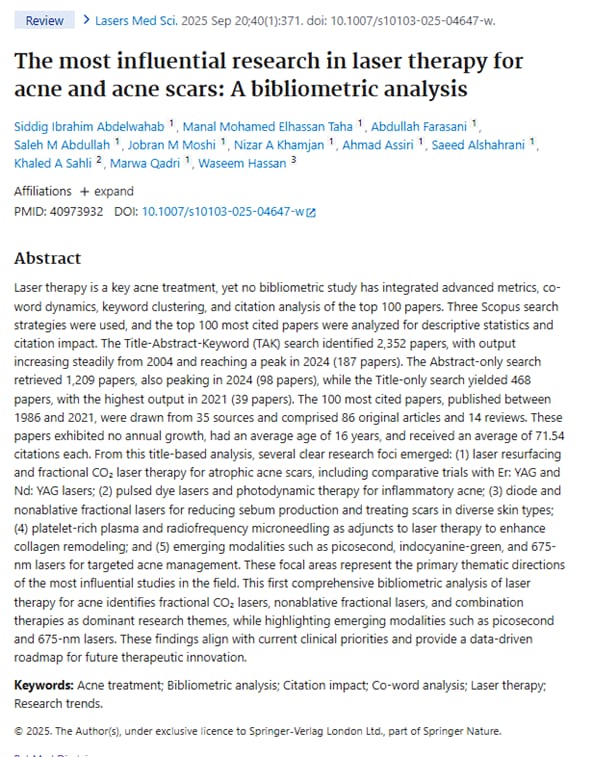
The paper analyzed the 100 most-cited papers from among thousands of studies on laser treatment for acne scars.
It outlined which devices have attracted substantial research and had an influence on the field.
The findings can broadly be grouped into three themes:
- ✔ Fractional CO₂
- ✔ Non-ablative fractional lasers
- ✔ Combination procedures using lasers alongside other treatments
Interestingly, these are all familiar approaches in skin clinics.
Their repeated appearance in research also reflects their long-standing clinical use and the ongoing evaluation of their effectiveness and safety.
Three key laser types for acne scars
As the paper illustrates, the following types frequently appear in the research:
- ✔ Fractional CO₂ lasers
- ✔ Erbium:YAG (Er:YAG) lasers
- ✔ Non-ablative fractional lasers
Fractional CO₂ lasers have been widely used for many years.
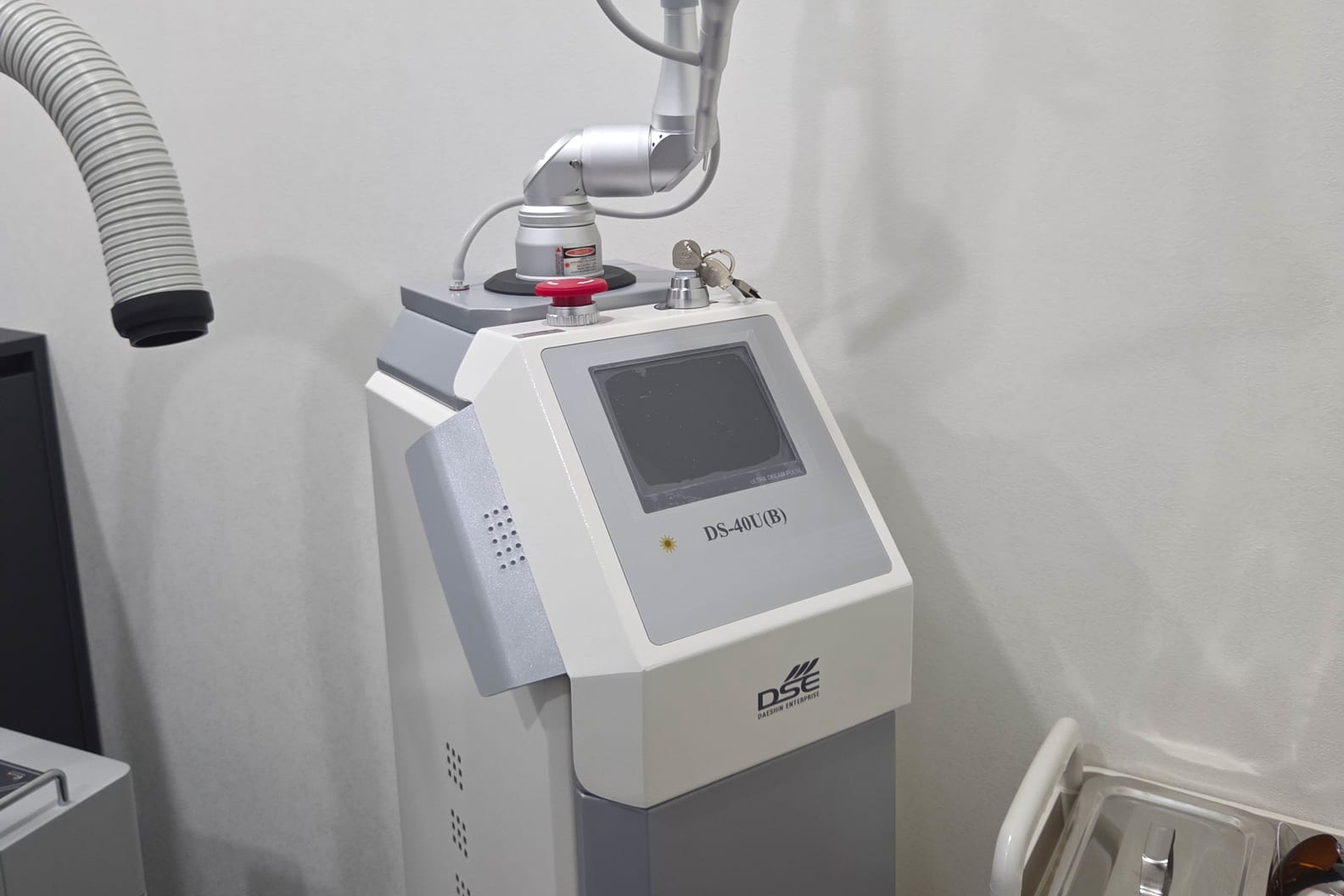
They create tiny areas of thermal stimulation to encourage skin regeneration and collagen formation, and are used to help improve depressed scars.
Erbium:YAG (Er:YAG) lasers treat the skin by precisely resurfacing it.
They may be used when both depressed areas and the texture of the skin surface need attention.
Non-ablative fractional lasers deliver thermal stimulation without removing the skin surface.
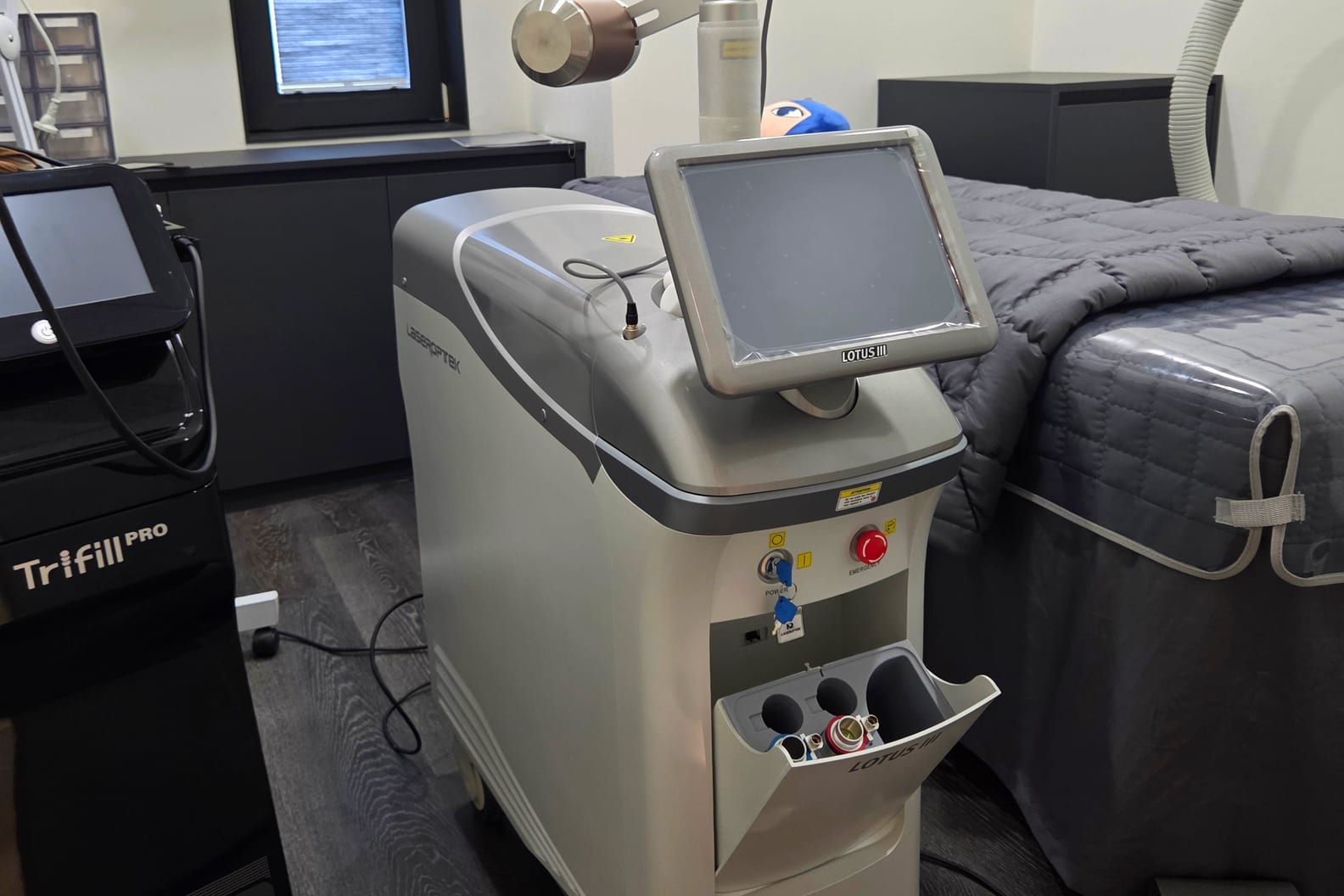
Because they cause comparatively less surface damage, recovery tends to be less demanding.
In my clinical experience, even scars grouped under the same term can differ considerably in shape and depth.
Rather than relying on one device, I plan treatment using equipment such as CO₂ lasers and Lotus III according to the situation.
I believe what matters is not which device is better, but which approach may be more helpful for the skin's current condition.
Why combination treatment matters
There is another point in the paper worth discussing:
It frequently mentions combination procedures that bring together different treatments.
The reason is fairly straightforward.
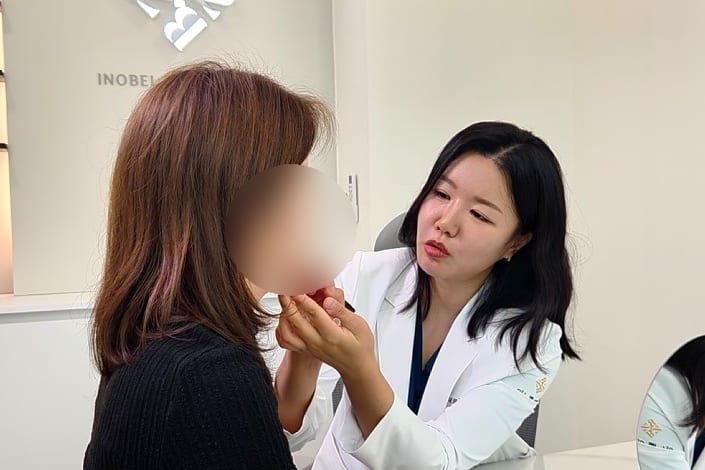
Acne scars usually involve more than the skin surface.
Beneath the dermis, fibrous tissue may be tethered, collagen may be reduced, and the skin's structure itself may have changed.
That makes it difficult for a single procedure to address every aspect at once.
In these cases, it is worth considering treatments that support regeneration or release adhesions beneath the dermis alongside laser treatment.
As I mentioned, my clinical experience has shown how much acne scars can vary from person to person.
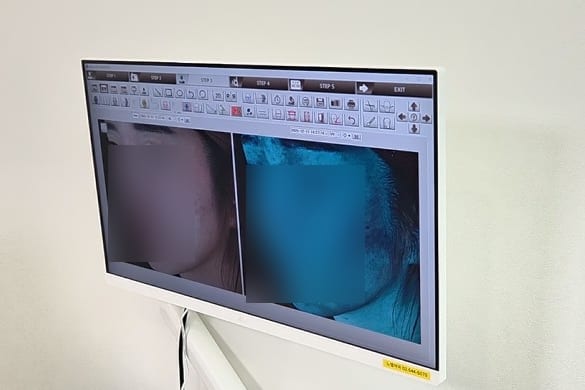
I therefore select lasers to suit the situation and, when needed, consider skin boosters such as Juvelook Volume as well.
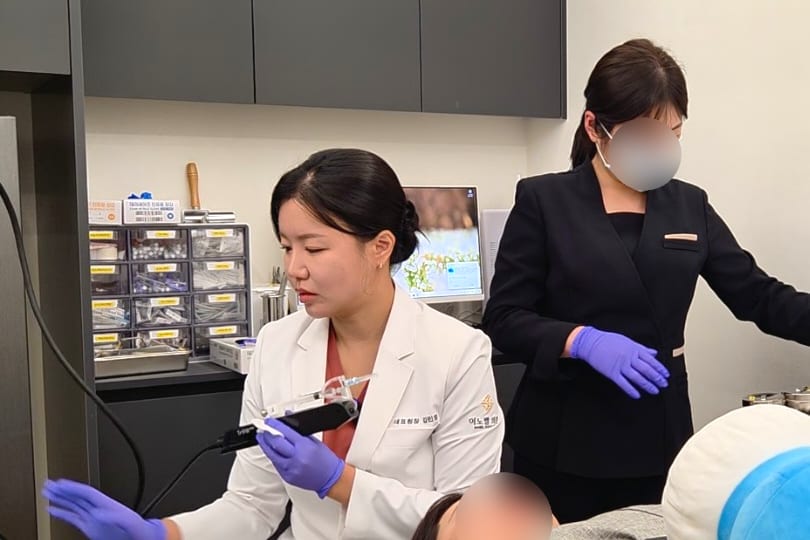
I may also plan treatments such as Trifill Pro to release adhesions beneath the dermis.
What matters is carefully assessing the scars and deciding how to combine the available treatments.
I hope this explains why there are so many devices, and why several procedures are sometimes planned together.
As reflected in the research, three broad laser types are commonly used for acne scars, while new types continue to emerge.
The point to remember is choosing an approach suited to you from among the many available devices.
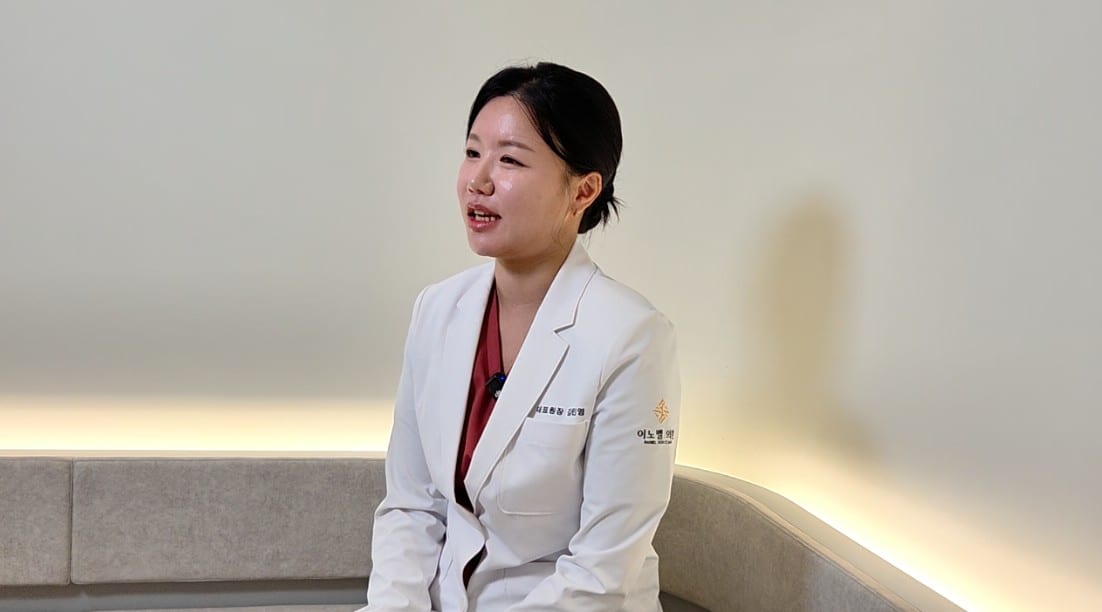
This can be difficult to judge on your own, so a detailed examination and consultation at a clinic can help clarify your options.
I assess the depth and shape of each patient's scars, then discuss how different devices and regenerative treatments may help before recommending a treatment direction.
This was Dr. Kim Min Young, Medical Director of INOBEL CLINIC.
< Related reading >
<INOBEL CLINIC notice> | ||
To give each patient careful attention, we see patients by appointment only. This means an appointment may not be available right away, and we appreciate your understanding. We would like to help as many people as we can, but for the quality of consultation and treatment we made this decision with care. Thank you for understanding. |
Mon–Fri 10:00 - 20:00 Lunch break 14:00 - 15:00 Saturday 10:00 - 16:00 Sunday 10:00 - 16:00 | ||
02-6958-5882 |