
Hello, I'm Dr. Kim Min Young, Medical Director of INOBEL CLINIC.
A painful treatment can be mistaken for an effective treatment.
“I was told to ask for a stronger treatment.”
I often encounter this assumption and hear advice like this.
Perhaps this helps explain why pain has increasingly come to be treated as a measure of effectiveness in discussions about Thermage.
The assumption is that if it hurts, it worked, and if it hurts less, it may not be effective.
But as a physician performing these treatments, I cannot conclude that more pain means a better result.
Today, I would like to examine that assumption more closely.
<My approach to care>
Why do people associate pain with effectiveness?
Thermage is, fundamentally, a treatment that uses heat.
Some stinging or discomfort is a natural response as heat is delivered into the skin.
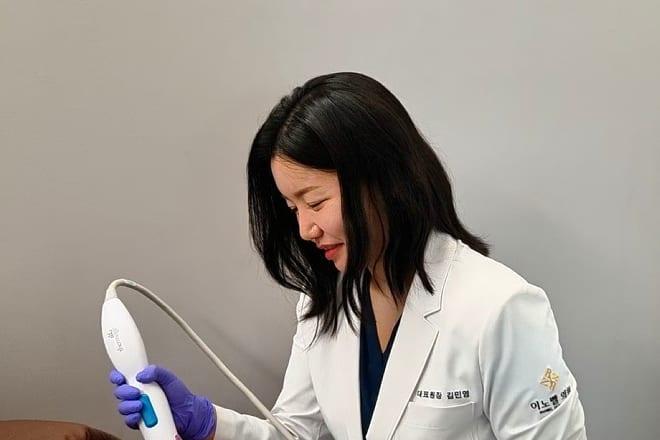
When a treatment feels hot or intense, it is easy to think, “Something must really be happening underneath.”
Especially if you have already heard that the procedure hurts, the pain itself can gradually become your measure of whether it is working.
A less painful session may then feel insufficient, while enduring more pain seems to promise more benefit.
There is an important point to remember, though.
People experience pain very differently.
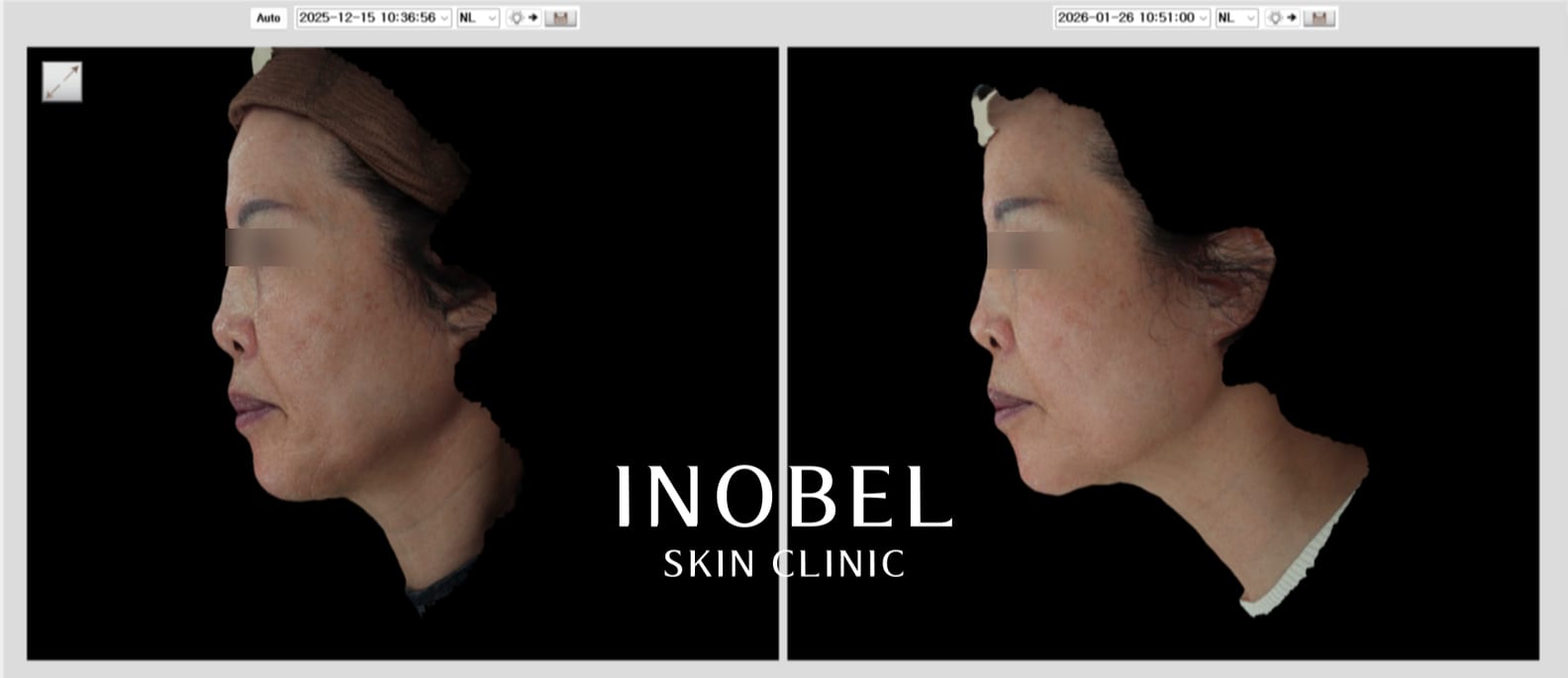
Skin thickness, the amount of fat, nerve distribution and even how you feel that day can change the sensation considerably, despite the same procedure and energy settings.
Feeling more pain does not necessarily mean heat was delivered more effectively, and feeling less pain does not mean the result will be poor.
<Curious about how long Thermage results last? See the related article.>
How does a physician assess effectiveness?
When assessing a result, physicians do not use the level of pain as their measure.
My main concern is whether the appropriate amount of heat reached the intended depth.
This lifting treatment delivers heat to collagen-containing layers to gradually improve elasticity.
So how deeply and consistently the heat was delivered matters much more than whether the treatment felt hot.
This is where a common misunderstanding arises.
Greater pain may feel like better energy delivery, but pain and the amount of heat delivered are not always proportional.
Areas with thinner skin or more sensitive nerves may hurt more.
Conversely, thicker skin or an underlying fat layer may make the same energy feel less painful.
Rather than simply increasing the output, treatment requires adjusting the energy to each area's thickness and response.
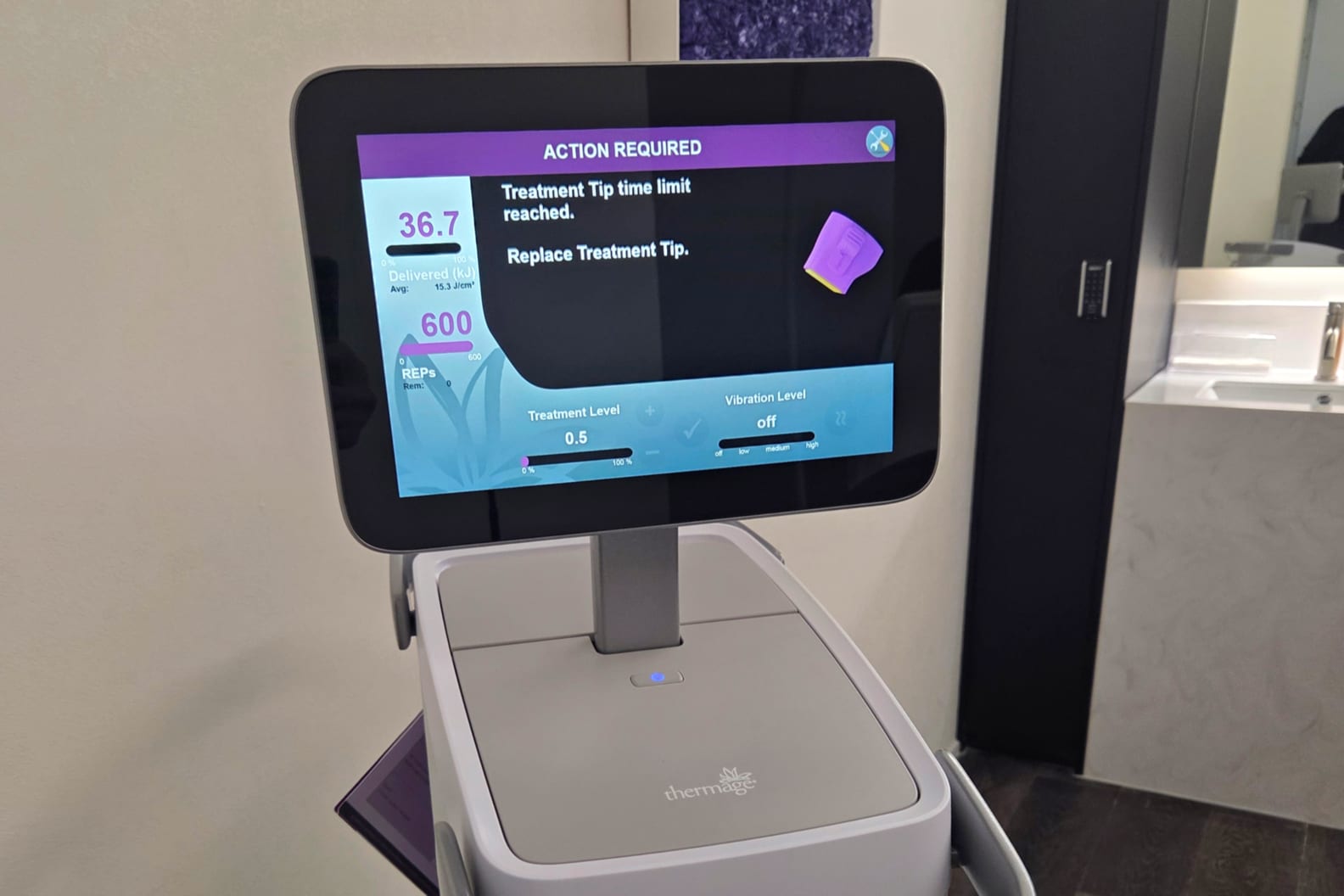
This is one reason experience matters.
Safety is another important consideration.
Continuing to raise the output based on pain can deliver excessive heat to the skin and cause problems such as burns.
Pushing too hard in pursuit of a stronger effect may make the outcome worse.
<Concerned about hollow cheeks after Thermage? Read the related article.>
Levelon Thermage: an approach designed with effectiveness in mind
When I consider adding a device, I look first at whether its results meet my clinical expectations, rather than its name recognition.
This lifting treatment was no exception.
I did not introduce the device simply because it was well known or in high demand.
I personally treated a range of cases and considered whether it could help my patients.
I was satisfied enough to introduce it. But after using it across different clinical cases, I noticed one limitation with Thermage.
Before the skin temperature rises beyond a certain level, the initial shots may not work as effectively within the skin.
Could each shot be used more effectively?
Could we reduce the energy lost during the initial stage?
Even with the same number of shots, their effectiveness can influence the result. That was not something I wanted to overlook.
After trying different methods and combinations myself, I developed the approach we call Levelon Thermage.
Thermage is performed as usual, but Onda lifting is applied beforehand.
Onda can be useful when both the fat layer and reduced elasticity are concerns.
I have also found it helpful as a preparatory lifting treatment to raise the temperature within the skin.
Preparing the skin with Onda before performing Thermage may create conditions in which even the initial shots can work more effectively.
With this approach, results may differ even when the same number of shots is used.
<Want to know more about Levelon Thermage?>
Ultimately, the priority is not to increase the intensity until it hurts or simply add more shots.
What matters, in my view, is how effectively each shot is used.
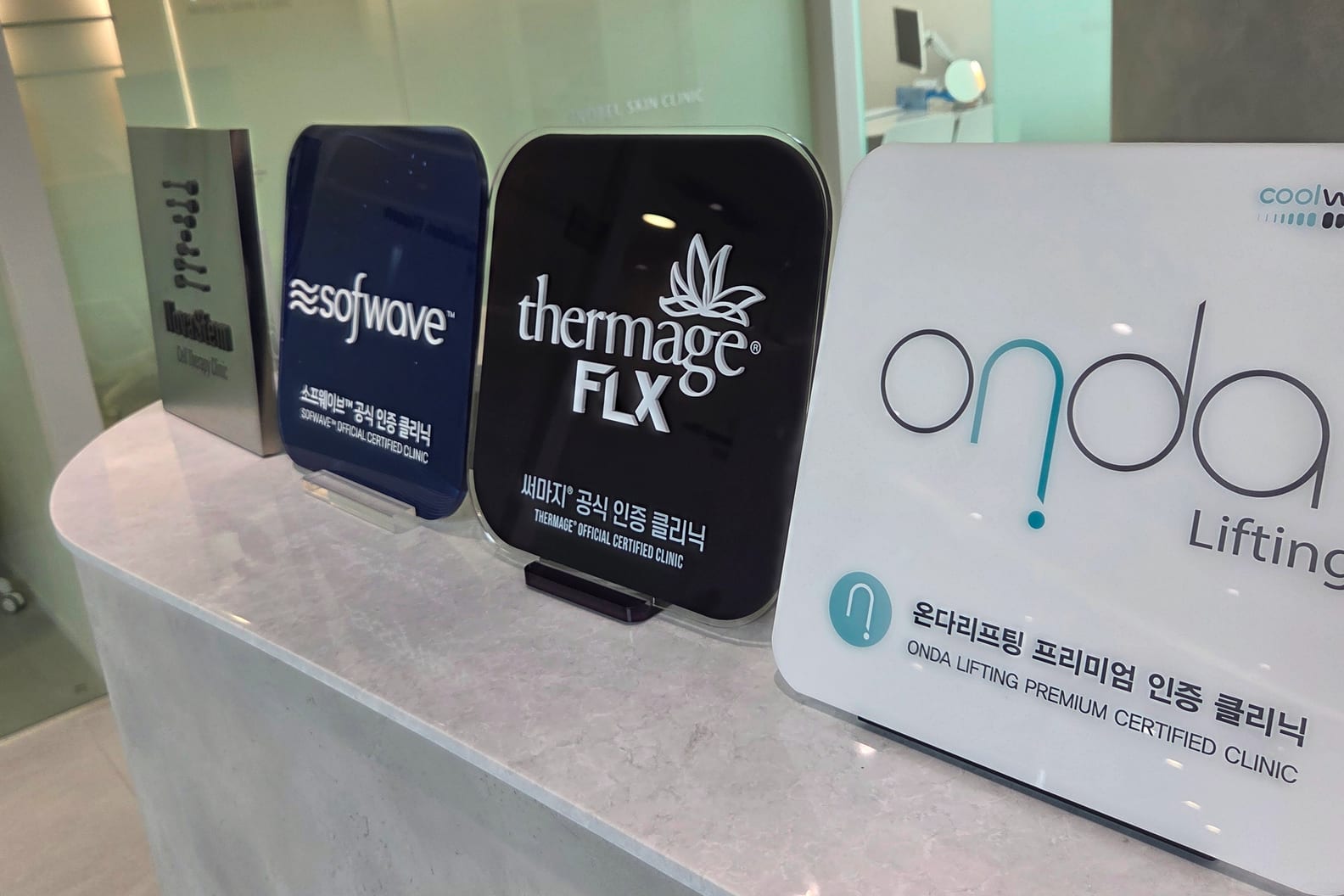
A plan tailored to your skin may help you achieve a satisfying result with less discomfort.
Remember that the outlook after Thermage depends on how the treatment is delivered, rather than how much it hurts.
This was Dr. Kim Min Young, Medical Director of INOBEL CLINIC.
< Related reading >
<INOBEL CLINIC notice> | ||
To give each patient careful attention, we see patients by appointment only. This means an appointment may not be available right away, and we appreciate your understanding. We would like to help as many people as we can, but for the quality of consultation and treatment we made this decision with care. Thank you for understanding. |
Mon–Fri 10:00 - 20:00 Lunch break 14:00 - 15:00 Saturday 10:00 - 16:00 Sunday 10:00 - 16:00 | ||
02-6958-5882 |