
Many people who visit us for acne scars have already tried several approaches.
They may have used ointments or kept up a home skincare routine, yet found that the scars changed less than they had hoped.
There is a reason for this.
These scars are not temporary surface concerns. They involve structural changes that have already developed deeper in the dermis.
As inflammation extends deeper, collagen and elastic fibers are damaged. During healing, they may settle into an irregular, weaker structure instead of returning to their normal arrangement.
When this process repeats, scars tend to become firmer and deeper over time.
Two important considerations are when treatment begins and the criteria used to plan it.
Different scar types have different characteristics.
Normal wound healing generally proceeds through inflammation → proliferation → remodeling.
Through these stages, damaged tissue is restored as closely as possible to its original structure.
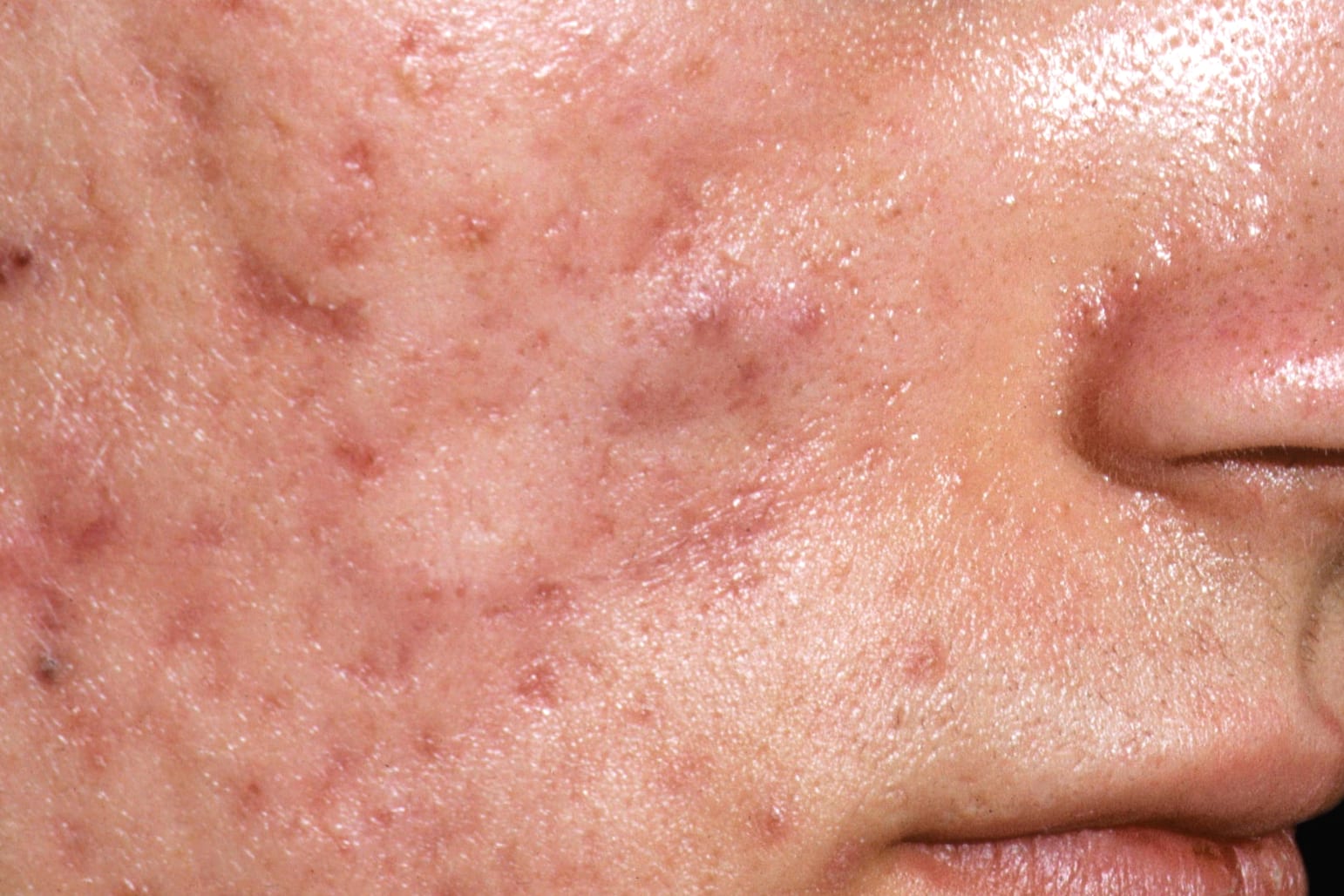
With repeated inflammation, as in acne, or with squeezing and irritation, this healing process may not proceed normally.
The scars that remain can take different forms depending on the pattern of damage.
I broadly divide them into four types.
Rolling scars
These are gently sloping depressions where insufficient collagen has formed.
Boxcar scars
These involve relatively deep dermal damage, leaving a structural depression with clearly defined edges.
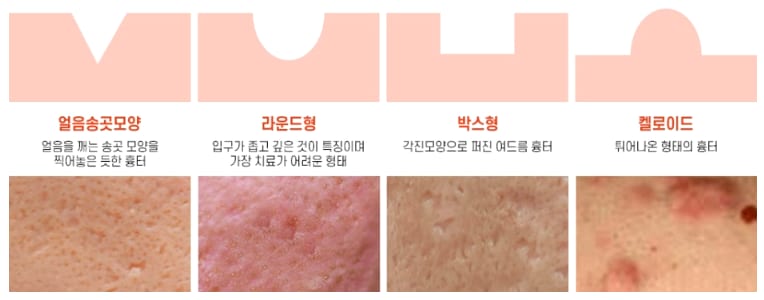
Keloids
These form when excessive fibroblast activity causes tissue to grow beyond the original wound boundaries.
Ice pick scars
Repeated inflammation can damage the support structures around pores, leaving narrow depressions that resemble punctures made by an ice pick.
When the causes and features differ in this way, what happens if every scar is treated with the same laser and settings?
It can be difficult to achieve the changes you expect.
<Read more if acne and excess sebum are concerns>
Why can it be difficult to notice an improvement?
Would repeated, stronger laser treatments help scars improve quickly?
It is understandable to think this way.
However, I believe the important questions are which layer is being targeted and whether stimulation reaches it at the right depth and direction, rather than simply how strong the treatment is.
Because the dermal structure is often altered, repeatedly applying strong laser treatment mainly to the surface can provoke inflammation ahead of regeneration and may slow recovery.
Conversely, when scars are tethered deeply, repeating surface-focused treatment alone may produce little structural change.
At INOBEL CLINIC, we first assess scar depth, the degree of tethering, and the skin's capacity to regain elasticity, then focus on an individualized plan.
<Read more if you are curious about managing redness>
How we tailor treatment to each case
The approach to acne scar treatment needs to vary according to scar depth and shape.
Increasing attention is being given to creating conditions that encourage the skin's own repair and regeneration, rather than relying on physically cutting tissue to create change.
For relatively shallow scars or scars accompanied by changes in skin tone, we use lasers such as Fotona StarWalker and PicoSure.
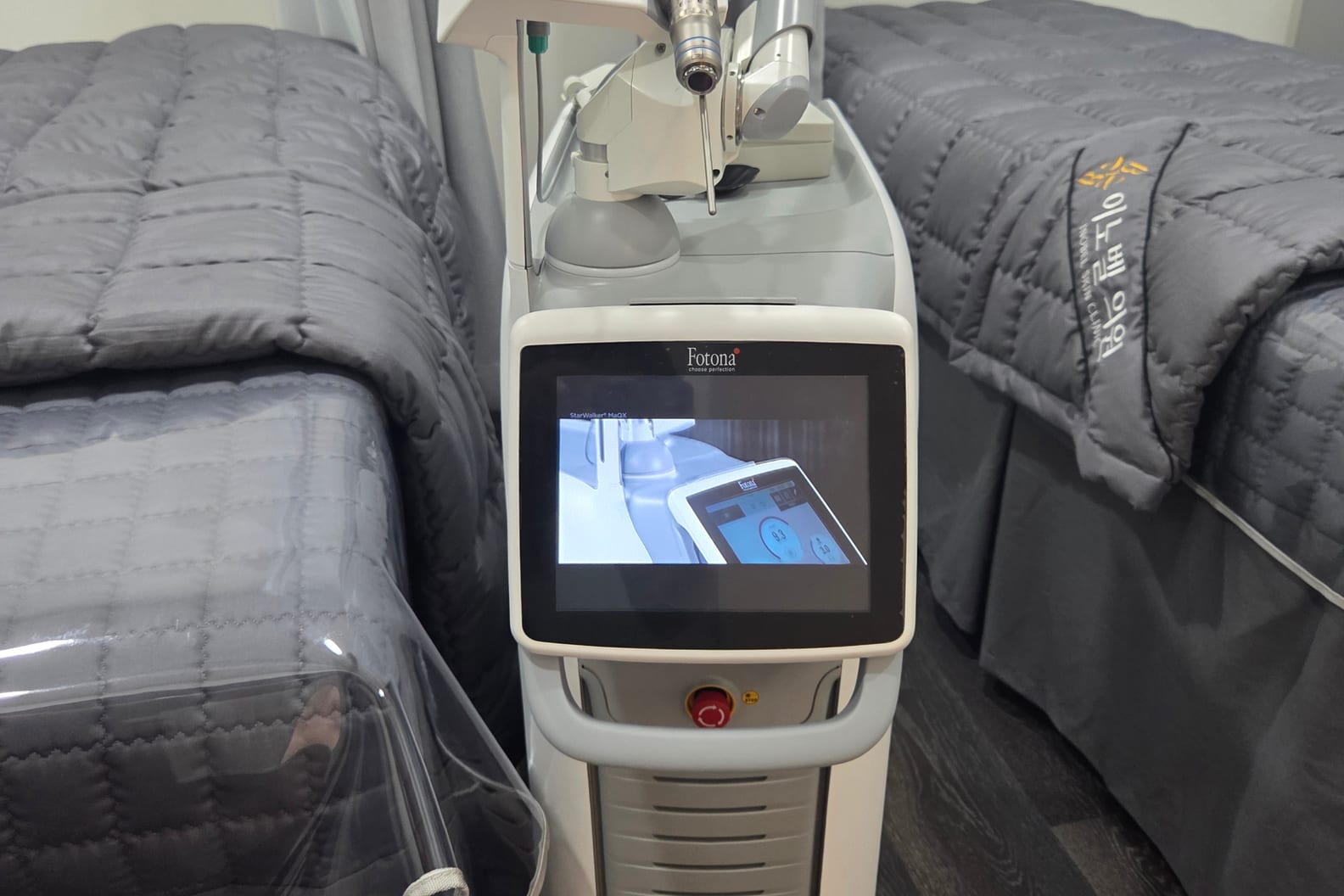
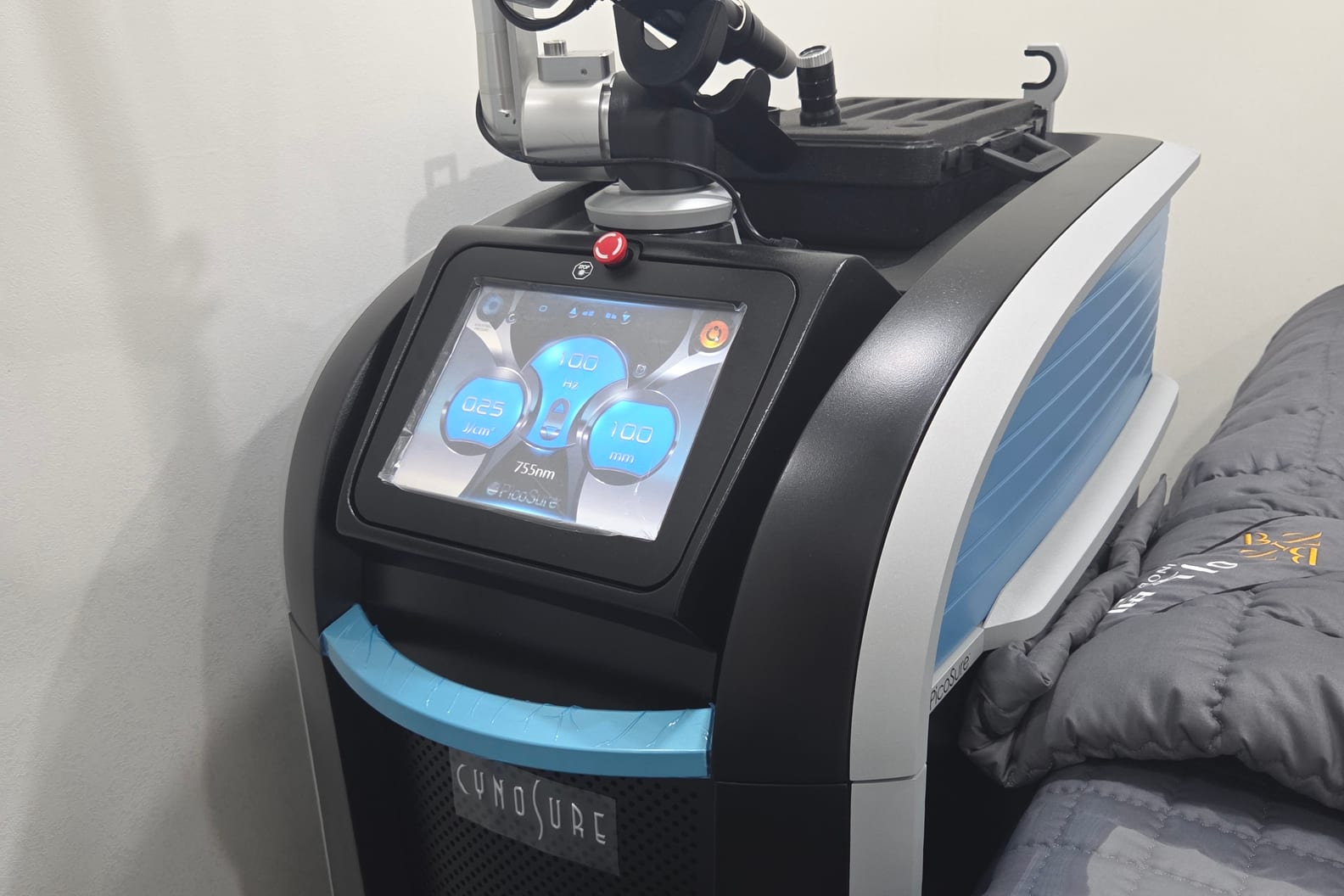
The aim is to deliver small, controlled thermal stimuli to the epidermis and upper dermis.
What matters is not delivering a large amount of energy at once, but adjusting it precisely within a range that does not disrupt the regenerative cycle.
With repeated sessions, collagen regeneration may gradually develop, with potential improvements in texture and tone.
When damage reaches the dermis, or scar depth is relatively consistent across an area, we center the approach on Trifill Pro.
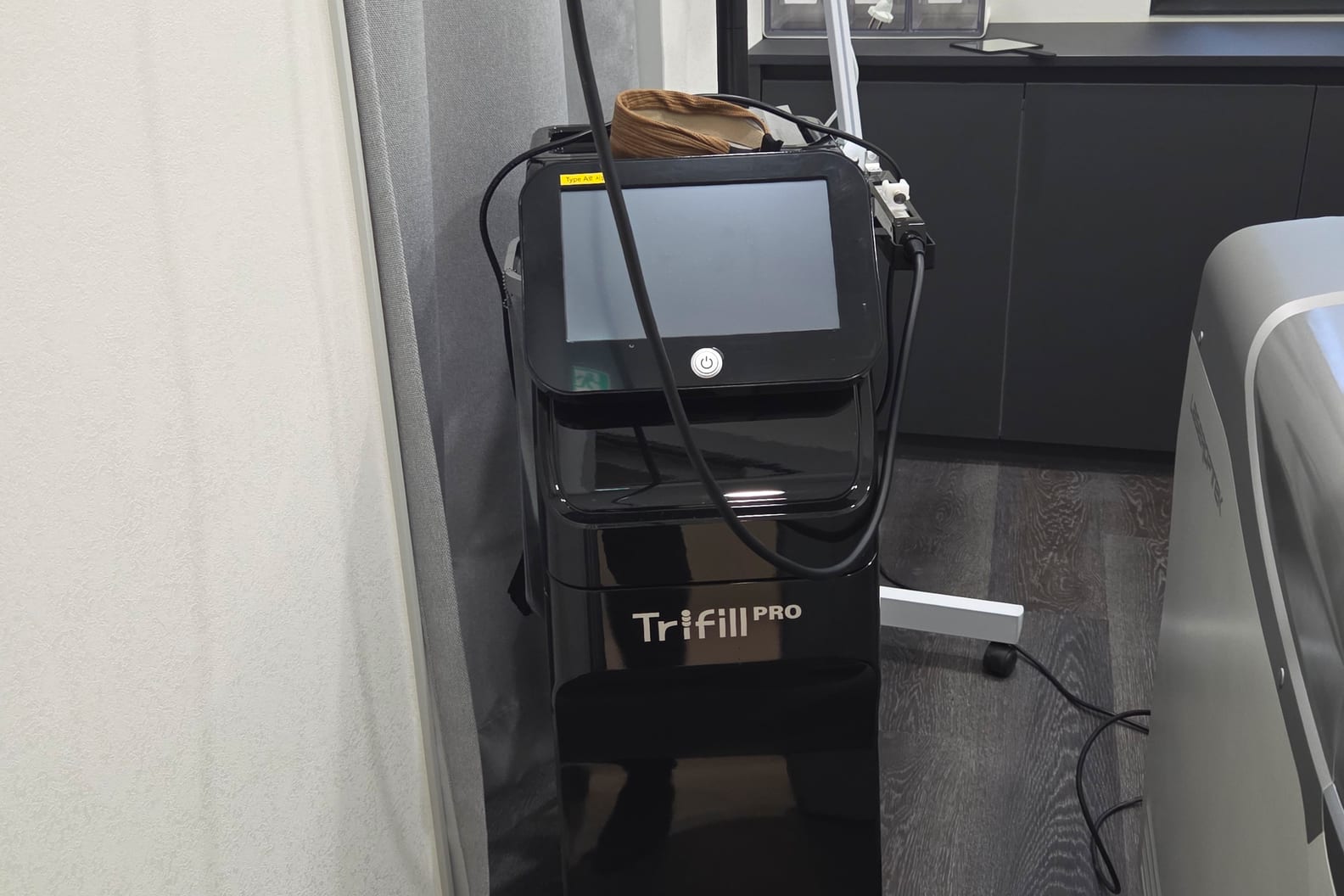
This method repeatedly delivers small stimuli to the dermis to progressively encourage signals involved in collagen regeneration.
Rather than aiming for a strong change at once, treatment can be divided into several sessions while monitoring the skin's response. This allows a more controlled approach that may help reduce risk.
The aim is to gradually release tension in tethered tissue and create conditions that allow depressed areas to fill in naturally, rather than forcibly cutting through the tissue beneath the scar.
For some cases with firmly tethered fibrous tissue, however, we may add limited subcision.
Our principle is to use it appropriately within the necessary area after Trifill Pro, rather than as a stand-alone approach.
Maintaining a supportive environment for regeneration afterward is also important.
Injections such as Rejuran and Juvelook may help support recovery of damaged dermis. When needed, dermal filler can provide additional support for the remodeled structure.

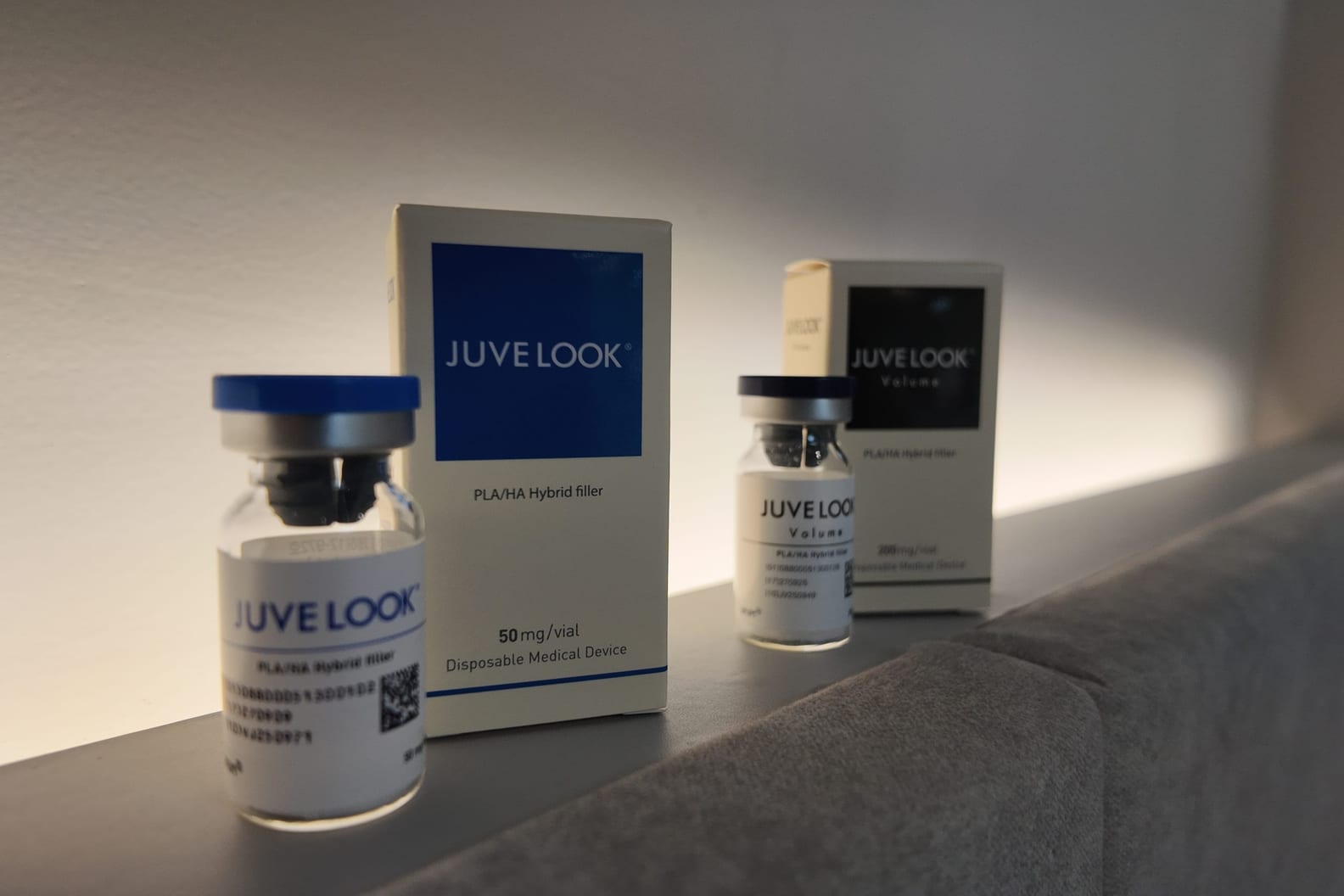
Acne scar treatment is not a process that necessarily ends with one method.
A staged combination of treatments based on scar shape, depth, and response is important.
At INOBEL CLINIC, instead of applying a predetermined package from the outset, we carefully assess each person's current skin condition and pace of recovery, then plan treatment accordingly.
I also struggled with acne for a long time when I was younger.
That is why, in scar treatment, I place less emphasis on aggressive stimulation and more on
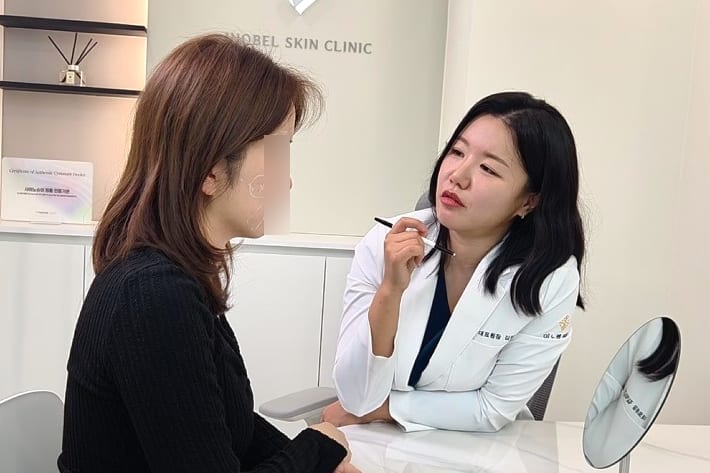
a conservative, careful approach that seeks useful improvement within the limits each person's skin can tolerate.
Our aim is to assess your current condition accurately and to treat it without excess.
We will be here to support you through that process.
Thank you for reading.
< Related reading >
<INOBEL CLINIC notice> | ||
To give each patient careful attention, we see patients by appointment only. This means an appointment may not be available right away, and we appreciate your understanding. We would like to help as many people as we can, but for the quality of consultation and treatment we made this decision with care. Thank you for understanding. |
Mon–Fri 10:00 - 20:00 Lunch break 14:00 - 15:00 Saturday 10:00 - 16:00 Sunday 10:00 - 16:00 | ||
02-6958-5882 |