
As winter approaches, people visiting our skin clinic near Eonju Station in Gangnam often ask:
My face has become so dry. Is there anything I can do?
It is a concern I understand.
Even with frequent facial misting or regular use of moisturizing products, the intense dryness of winter can make routine care feel insufficient.
Spending time in the consultation room, I sometimes notice my own skin becoming dry despite taking care of it.
With these seasonal concerns in mind, I would like to discuss treatments that may help at this time of year.
This is my approach to patient care.
In winter, your skin can lose moisture faster than you expect
A study of the effect of indoor winter conditions on facial skin found that changes can happen surprisingly quickly.
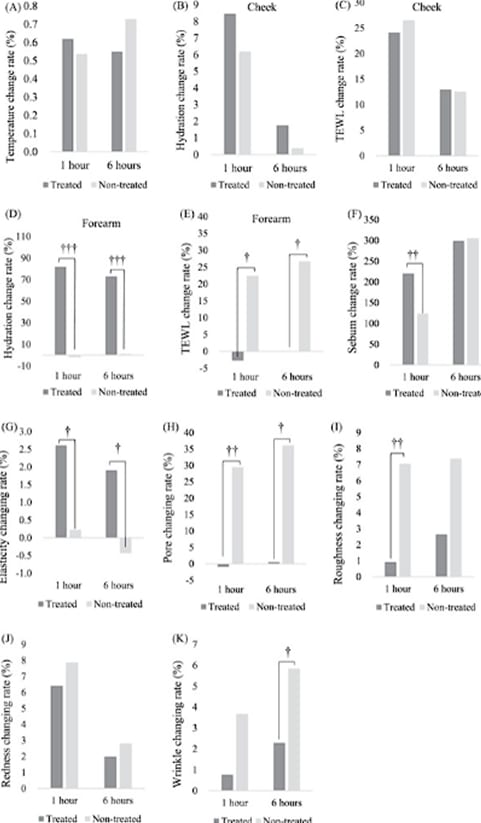
In panel B of the paper's data, which shows changes in the cheek, moisture levels fell noticeably after just 6 hours of exposure to a dry indoor environment.
In other words, simply spending the day in a heated room can leave your face showing signs of drying out within a relatively short period.
The study explains that a cream containing ceramides can help maintain skin homeostasis and protect a compromised barrier.
In practical terms, your usual care may not be enough in winter, and you may need to give more attention to barrier protection and moisturizing.
Looking for information on Botox? Read on.
How winter weather puts stress on your skin
Winter is dry, so isn't it natural for my face to be dry too?
You have probably heard this before.
It is such a familiar idea that we tend to take it for granted.
But when I ask why skin becomes so dry, surprisingly few people can explain it precisely.
Let me describe why your face can start to feel rough and dehydrated in a little more detail.
First, the temperature drops in winter.
As the air cools, the amount of water vapor it can hold also decreases.
The air already contains relatively little moisture.
Indoor conditions add to this.
Once heating is turned on, the air becomes drier, and indoor relative humidity can often fall to 20–30%.
That means we may spend the entire day in a very dry environment.
The outermost layer of the skin, the stratum corneum, normally helps retain moisture.
When the surrounding air becomes excessively dry, moisture continues to escape from this layer, leaving the surface rough and more prone to cracking.
This is why your skin can feel especially tight after your usual cleansing routine in winter, or feel drier even when you have done nothing different.
It is also worth considering that exposure to low temperatures and low humidity can reduce the skin's ability to restore its barrier.
In this state, it may retain less moisture and lose more water than it does in summer.
Curious about Thermage lifting? Read on.
Which treatment do people ask about at this time of year?
Doctor, would a hydrating injection help my dry, rough skin?
This is a question I often hear during this season.
A hydrating injection, also known as Mulgwang, is a skin booster that delivers hyaluronic acid directly.
Hyaluronic acid can attract close to 1,000 times its own weight in water.
It can be a useful ingredient for people who need hydration or whose skin has become less hydrated with age.
However, how long the effect lasts can be a concern.
Although these injections can replenish hyaluronic acid, there have been limits to how long that hydration can be retained.
That brings me to another treatment I would like to discuss today: the Byrizen skin booster.
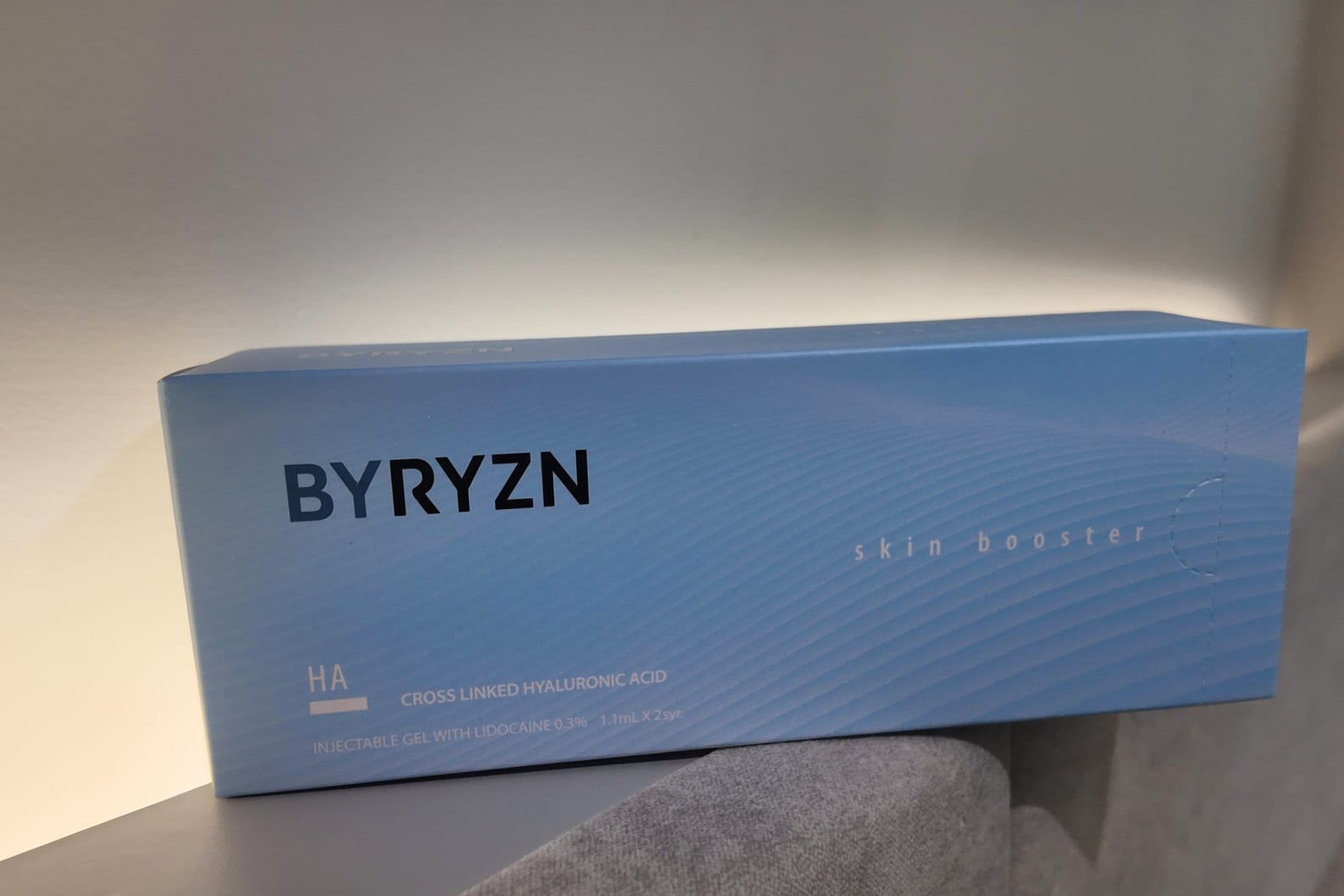
You can think of this product as starting from a question:
Could we help that hydrated feeling last a little longer?
That is the idea behind the product.
Its key feature is a cross-linked structure.
If you pour water into a container with widely spaced holes, it quickly drains out.
But a container lined with a closely woven mesh can hold the same water for longer.
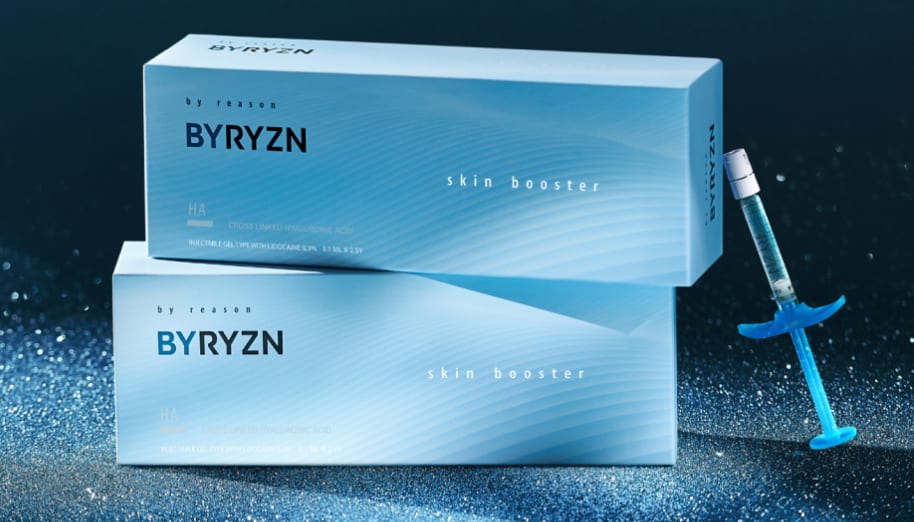
Byrizen is a skin booster that applies this principle.
Cross-linking connects hyaluronic acid particles into a network, helping moisture escape less readily.
The aim is to increase the time moisture is retained, so hydration can last relatively longer.
This difference may be helpful in winter, when the environment continually draws moisture away from the skin.
Many people who come to our clinic have already tried a range of home care measures.
They have changed moisturizers and tried using a humidifier.
They come in because, despite their efforts, the dryness has been difficult to improve.
I am not suggesting that Byrizen is the answer for everyone in this situation.
There are more treatment options than you may expect, and the choice can vary according to skin type, barrier condition, and sensitivity.
I simply wanted people troubled by rough, dehydrated skin each winter to know that this type of treatment is one possible option.
Thank you for reading.
< Related reading >
<INOBEL CLINIC notice> | ||
To give each patient careful attention, we see patients by appointment only. This means an appointment may not be available right away, and we appreciate your understanding. We would like to help as many people as we can, but for the quality of consultation and treatment we made this decision with care. Thank you for understanding. |
Mon–Fri 10:00 - 20:00 Lunch break 14:00 - 15:00 Saturday 10:00 - 16:00 Sunday 10:00 - 16:00 | ||
02-6958-5882 |