
In practice, I often meet people who chose a treatment based on its shot count or price and felt disappointed with the outcome.
What if Thermage produces less change than expected?
This concern brings me back to an important point.
With radiofrequency treatments such as Thermage, the outcome depends on the condition of the skin and how energy reaches it, rather than simply the cost or number of shots.
Today, I would like to discuss the conditions that may help support Levelon Thermage results, and the factors behind a noticeable response beyond the shot count.
<Please read about my approach to care when you have time>
Why Thermage may fall short of expectations
Thermage uses radiofrequency (RF) heat to stimulate the dermis and fibrous septa, inducing structural changes in collagen fibers followed by a regenerative response.
When RF heat reaches collagen, its triple-helix structure temporarily unwinds and contracts. New tissue synthesis and remodeling then continue over several weeks to months.
In clinical practice, results can vary considerably.
One possible reason is that energy reaches skin that is not adequately prepared to respond to heat.
In that situation:
- Heat may not accumulate sufficiently in the skin.
- Energy intended for deeper layers may be spent near the surface.
- Heat may be distributed unevenly.
Even with the same number of shots, the amount and density of energy actually acting within the skin may differ.
This can lead to differences in the changes you notice.
<What to read before Thermage treatment>
Where Levelon Thermage takes a different approach
Levelon Thermage is based on a combined approach that applies Onda first, then Thermage.
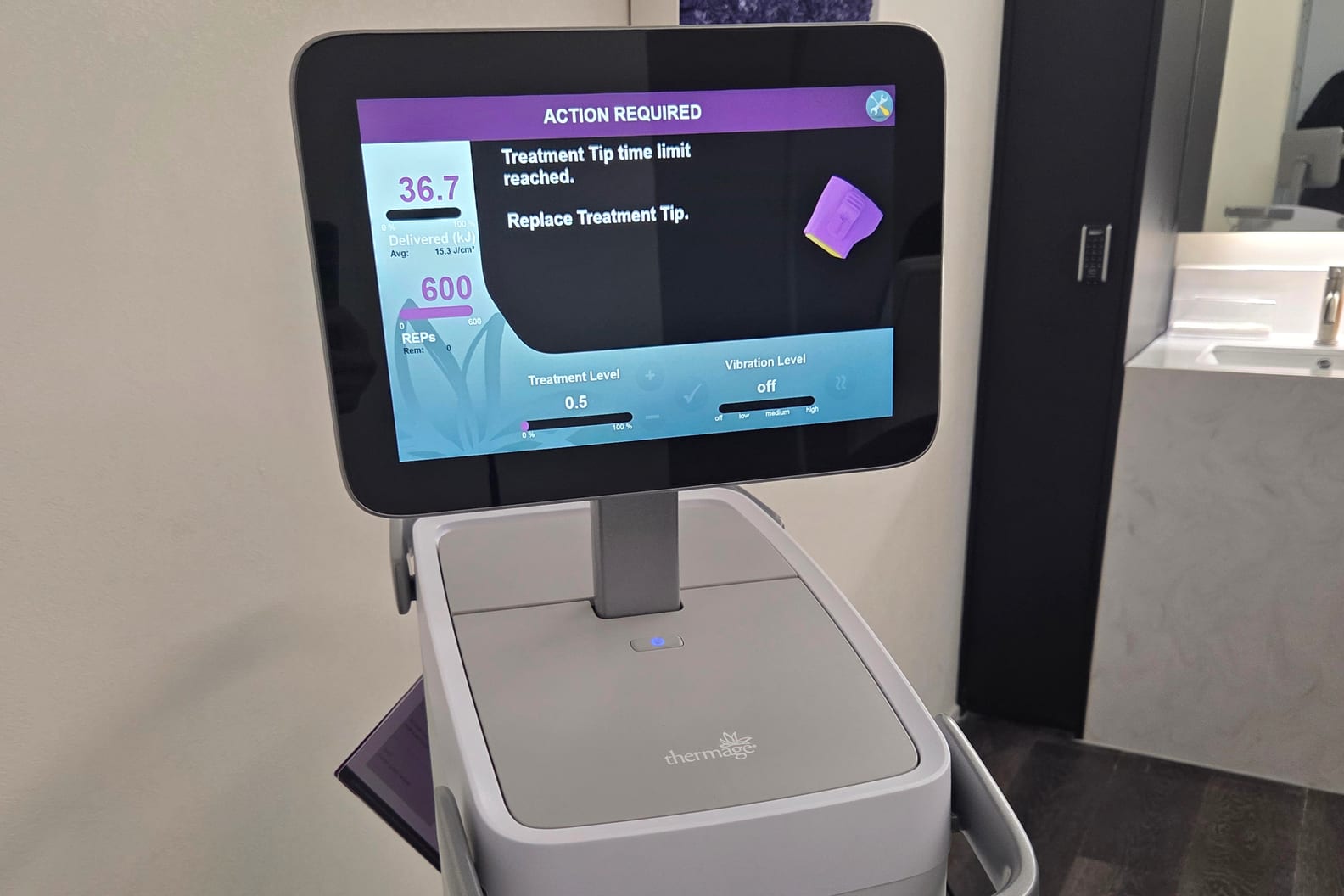
Onda uses microwave energy to gradually raise tissue temperature from the surface to the dermis.
This process can dilate small blood vessels and increase blood flow. Improved oxygen and nutrient delivery may in turn support tissue metabolism and heat transfer.
With this preparation, the skin and dermal tissue may respond to subsequent RF energy more steadily, rather than as an abrupt stress.
This may help reduce surface heat loss and energy dispersion during the initial Thermage shots.
As tissue electrical resistance gradually decreases, conditions may also allow energy to reach the deeper dermis and areas near the fibrous septa more evenly.
This may support not just collagen contraction but also collagen remodeling and reorganization.
Levelon Thermage may therefore allow Thermage energy to act more efficiently from the outset than starting with Thermage alone.
The difference may extend beyond the initial feeling of tightness or firmness to the course of collagen regeneration and maintenance of elasticity over several months.
<Read more if you would like to learn about Thermage and Onda>
Energy density matters more than shot count.
How many shots did you have?
This is something many people want to know.
Clinically, however, I consider how efficiently each shot acts more important than the total number.
Because Levelon Thermage first warms the skin with Onda, the perceived intensity of the response may differ even with the same shot count.
For example, in some cases, a response with 300 shots may be perceived as comparable in density to one with 600 shots.
The point is not simply a reduction in shots. It is how efficiently energy reaches the layers where it is needed.
- Reducing unnecessary repeated stimulation.
- Concentrating heat energy in the intended layers.
- Taking the demands of recovery into account as part of the approach.
<Read more if you are curious about stem cell injections>
What I assess before planning treatment
The assessment before treatment often makes a substantial difference to lifting results.
Even when faces appear similar, heat sensitivity, dermal hydration, the speed of the collagen response, and recovery vary from person to person.
With heat-based treatments such as Thermage, the recovery response after stimulation is part of how the outcome develops.
If recovery capacity is not considered, an initial change may be noticeable but may not last as well.
When planning treatment, I do not view the face as a fixed shape. I first consider how quickly it may recover and remodel after heat stimulation.
I think beyond the moment of energy delivery to how the tissue will respond and reorganize afterward.
<Curious about the difference between Botox and dermal filler?>
Supporting treatment results need not be complicated.
- Assess and prepare the skin first.
- Create suitable conditions for energy delivery.
- Then consider the direction and depth of action, rather than shot count alone.
At INOBEL CLINIC, we have treated a range of skin concerns in more than 60,000 people and continually observed how responses vary with skin condition.
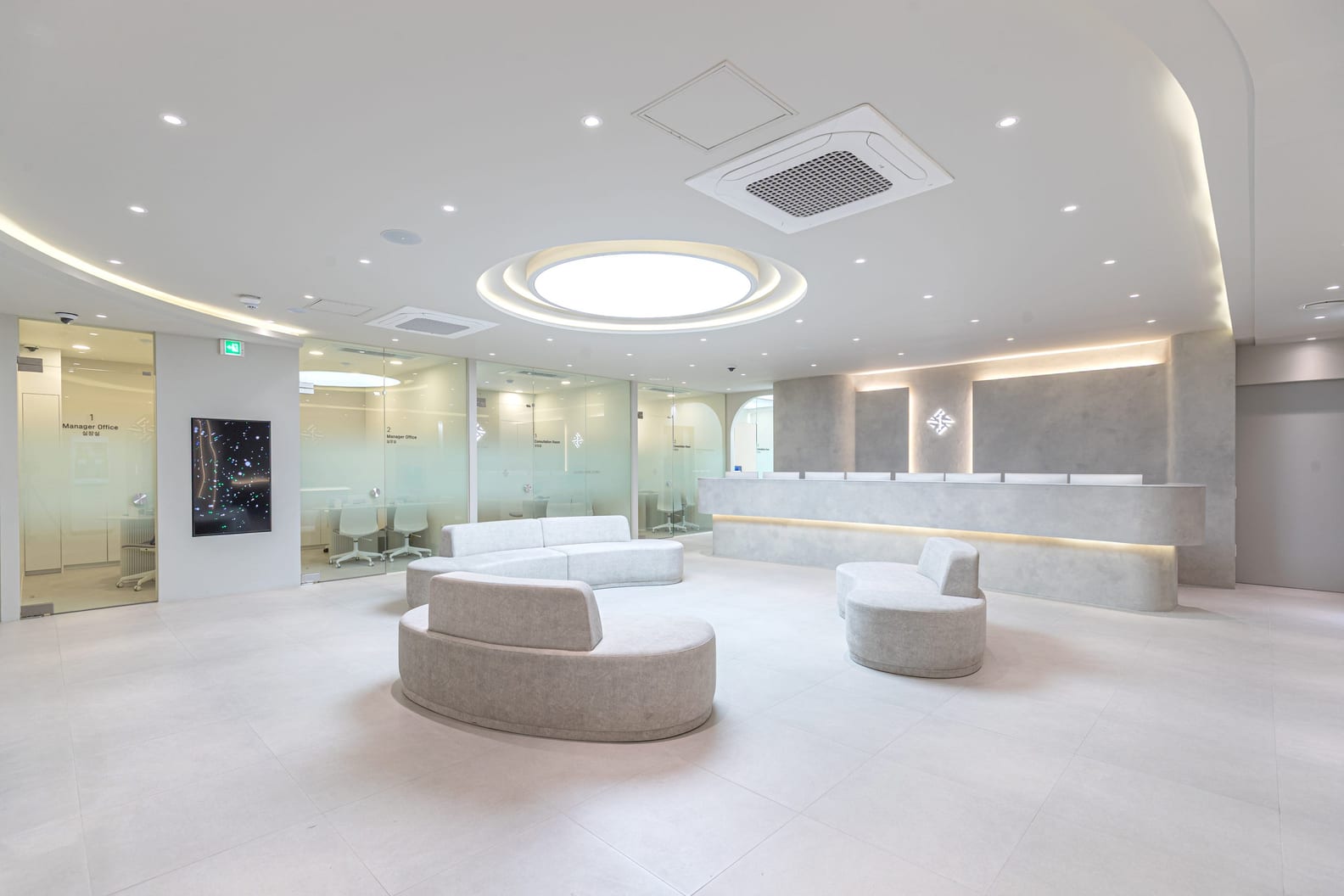
With clinical experience totaling more than 300,000 Thermage shots, we use practical criteria to consider which skin can receive a given energy setting and how it should be delivered.
I believe this accumulated experience provides a basis for making outcomes more predictable, rather than leaving them to chance.
I believe change should extend naturally into everyday life, beyond the initial treatment decision.
At INOBEL CLINIC, we will continue to apply these same standards to help support natural-looking changes.
< Related reading >
<INOBEL CLINIC notice> | ||
To give each patient careful attention, we see patients by appointment only. This means an appointment may not be available right away, and we appreciate your understanding. We would like to help as many people as we can, but for the quality of consultation and treatment we made this decision with care. Thank you for understanding. |
Mon–Fri 10:00 - 20:00 Lunch break 14:00 - 15:00 Saturday 10:00 - 16:00 Sunday 10:00 - 16:00 | ||
02-6958-5882 |